Bhagavad Ramanujacharya (1017 – 1137 CE) was among the foremost Indian philosophers and social reformers to emphasise the equality of all living beings.
His philosophical establishment that unconditional surrender is the means to salvation was influential to the Bhakti movement. He also restored innumerable temples from ruin and codified administrative and liturgical procedures.
Ramanuja is the most revered among followers of all vaishnava sects as He formulated a solid framework for a distinct theistic creator (Srimannarayana) based on vedas and other scriptures.
This philosophy is codified as Visishtadvaita (qualified monism), which along with Shankara Bhagavadpada’s Advaita (unqualified monism) and later Madhvacharya’s Dvaita (dualism), form the three main schools of sanathana dharma philosophies. Each philosophy postulates a different relationship between Srimannarayana (brahman or paramatma), sentient souls (jivatma) and the created universe (loka).



Life and Philosophy
Ramanuja’s seminal works include his commentaries on the prasthana thrayam, which includes Vedartha Sangraha for Upanishads, Gita Bhasya for Srimad Bhagavad Gita, and Sri Bhasya, Vedanta Dipa and Vedanta Sara for Brahma Sutras. He wrote the gadya trayam, comprising Sarangati Gadya, Sriranga Gadya and Sri Vaikuntha Gadya, espousing his surrender to Sriman Narayana. Furthermore, he prescribed a set of liturgical texts for worship in Nitya Grantha. All nine works are collectively referred to as the Navrathnas.
In addition to propagating Sri Vaishnava philosophy, Bhagavad Ramanuja promoted the equality of human beings at the feet of Srimannarayana, irrespective of their creed, social or monetary status. He revealed the essence of Vedantic teachings to the common people. He also opened the temple doors to everyone at a time when only the clergy and privileged were allowed. He was indeed among the first, true social reformers who instilled the essence of vasudhaiva kutumbakam (“the universe is one family”), and emphasised the stewardship of protecting nature and its resources.
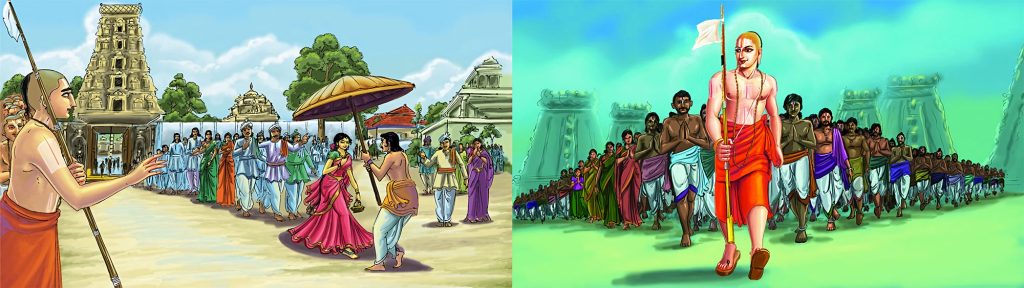
Ramanujacharya travelled the length and breadth of the Indian subcontinent, reaching as far north as Kashmir. He was able to inspire reformers and thinkers, despite widespread resistance to his message of social reform and the numerous attempts on His life. Due to his unflinching efforts, many acharyas from other schools of Vaishnava philosophy have taken inspiration from Ramanuja’s teachings, including Swaminarayan and Swami Ramanand. His works have also inspired poets like Thyagaraja, Bhaktha Ramdas, Annamacharya, Kabir and Meerabai. In spite of all His achievements, Ramanuja remained a humble celebrator of His acharyas (preceptors) until His last breath.
Today, Ramanujacharya’s teachings have taken on renewed importance. Humanity’s single-minded focus on materialistic comforts is leading to divisiveness, environmental destruction, suffering of the less fortunate, and a weakening of the moral fibre of society. Ramanuja’s teachings offer an antidote to these challenges by emphasising spiritual focus and helping the disadvantaged.
Statue of Equality
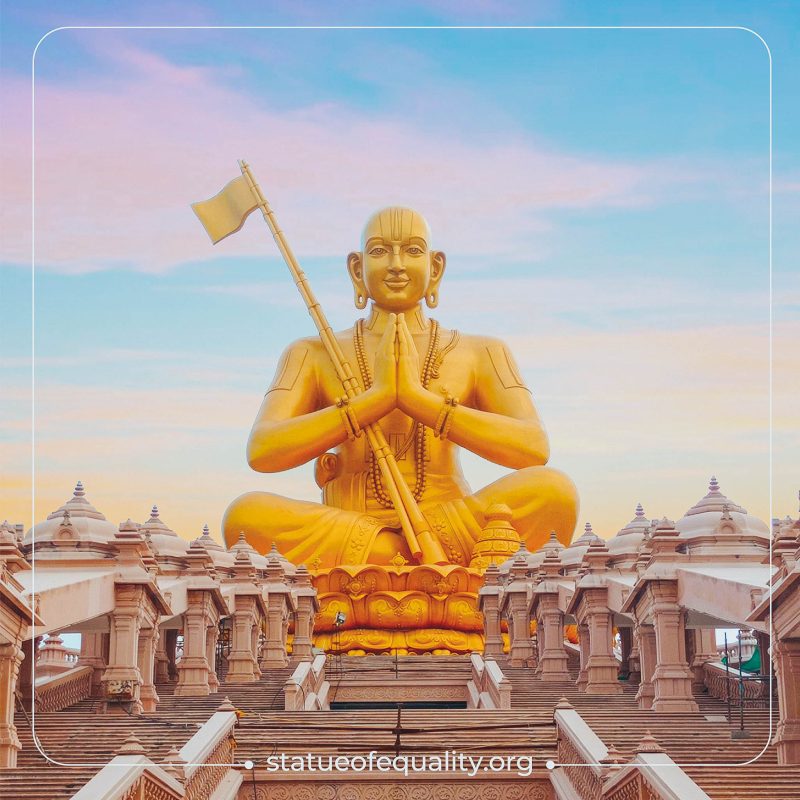
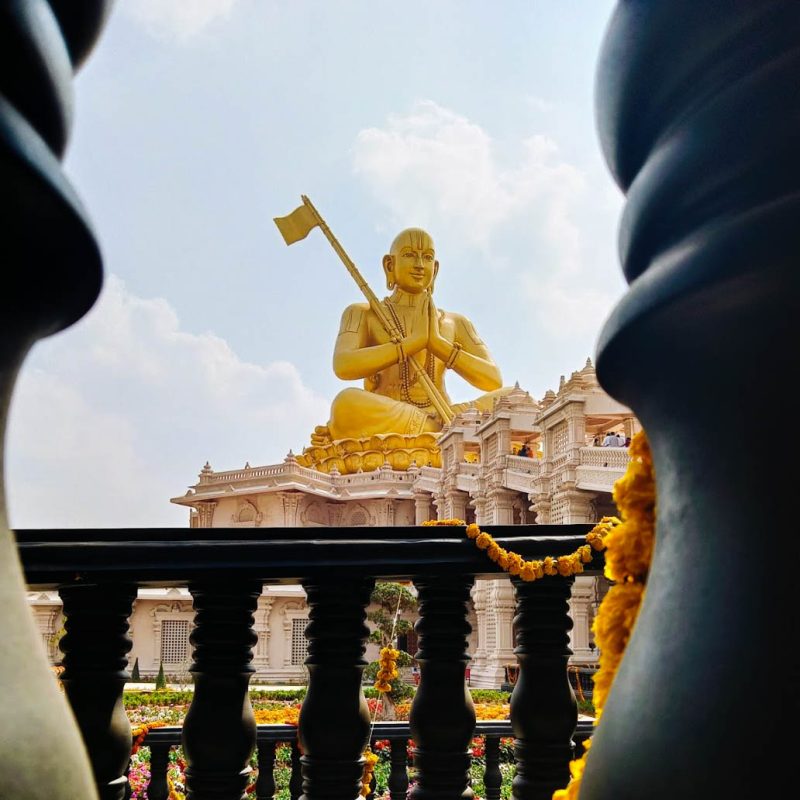
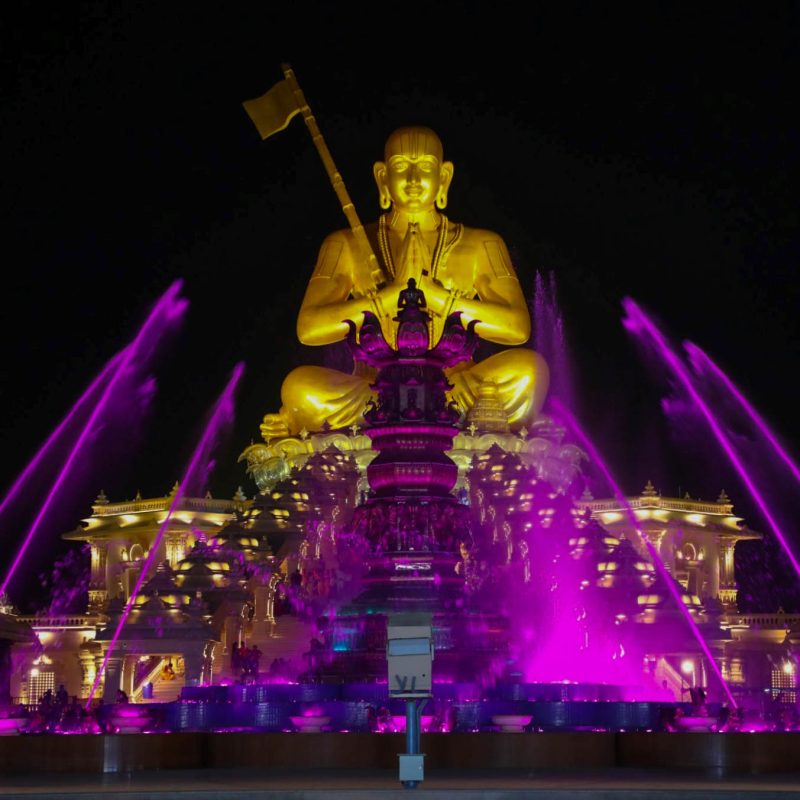
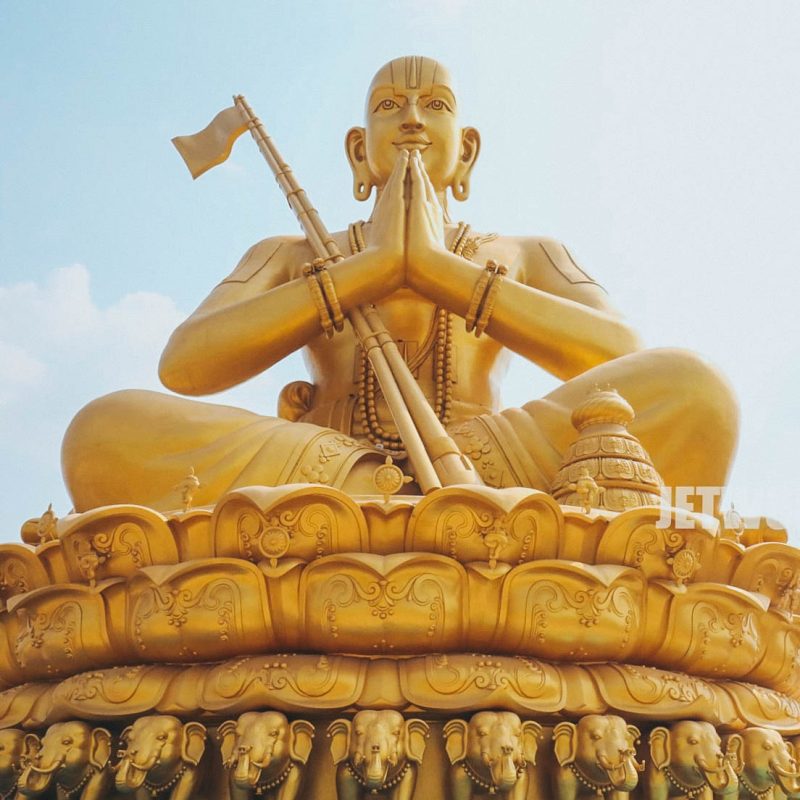
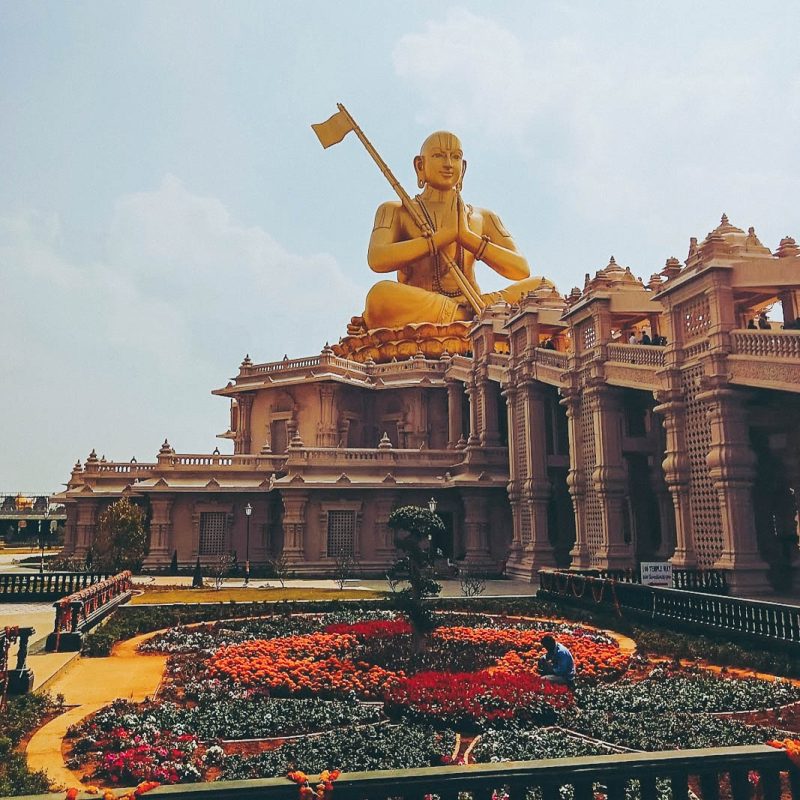
Sri Chinna Jeeyar Swamiji commemorated the contributions of Bhagavad Ramanujacharya with the Statue of Equality, featuring a 216-foot (66-metre) panchaloha (five-metal alloy) statue of Ramanuja, along with an archa-murti (deity) made with 120 kg of gold.